

Lowlife Paradise: The Works of Glenn Barr arrives, for readers and viewers alike, as more than a catalogue raisonné or a retrospective: it is a focused attempt to translate a restless, pictorial imagination into the language of the book. Glenn Barr’s work—at once cartoonish and baroque, playful and implacably strange—resists tidy taxonomies; this volume, by … Continue reading The Adaptable Educator’s Book Review – Lowlife Paradise: The Works of Glenn Barr by La Luz de Jesus & Last Gasp

The Adaptable Educator’s Book Review – Goya by Robert Hughes
Robert Hughes’s Goya stands as a tour de force of art history writing, blending rigorous scholarship with the flair of a seasoned cultural critic. Far more than a catalog of paintings, Hughes’s study excavates the fertile contradictions of Francisco Goya’s life and work—his oscillation between courtly success and outsider defiance, his engagement with Enlightenment optimism and his … Continue reading The Adaptable Educator’s Book Review – Goya by Robert Hughes
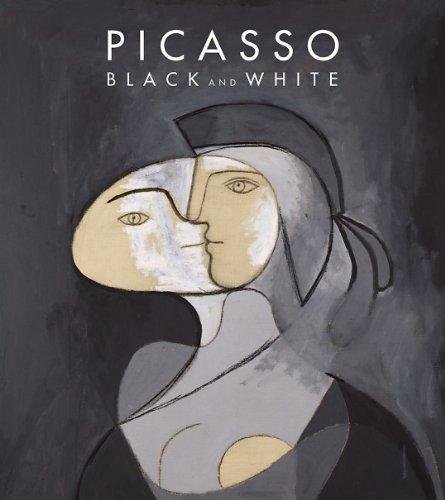
The Adaptable Educator’s Book Review – Picasso: Black and White, Edited by Carmen Giménez
In Picasso: Black and White, edited by Carmen Giménez, the reader is invited to traverse the often-overlooked monochromatic corridor of Pablo Picasso’s immense oeuvre—a space not of limitation, but of liberation. This exquisite volume, published in conjunction with the Guggenheim Museum’s 2012 exhibition, is not merely a visual archive; it is a meditation on the elemental … Continue reading The Adaptable Educator’s Book Review – Picasso: Black and White, Edited by Carmen Giménez

The Adaptable Educator’s Book Review – ARh+ by H.R. Giger
In ARh+, Hans Ruedi Giger, the late Swiss surrealist and visionary designer, delivers a visceral autopsy of the human psyche through one of the most unflinchingly intimate portfolios of his career. Less a book than an arcane grimoire, ARh+collects artworks, diary fragments, photographs, and design sketches that together form a blood-soaked fingerprint of a singularly uncompromising imagination. … Continue reading The Adaptable Educator’s Book Review – ARh+ by H.R. Giger
An Argument for the Wabi-Sabi in Rembrandt’s Art
I believe it could be argued that Rembrandt's art is a perfect example of how Wabi-sabi can be found in unexpected places. Wabi-sabi is a Japanese aesthetic that celebrates the beauty of imperfection, impermanence, and simplicity. It is a philosophy that encourages us to embrace the flawed and the fleeting, and to find beauty in … Continue reading An Argument for the Wabi-Sabi in Rembrandt’s Art
Considering the wabi-sabi-ness of David Park’s Art
David Park was an American artist known for his contributions to the Bay Area Figurative Movement. His style was characterized by his loose, gestural brushstrokes and his focus on the human figure. While his work often included elements of abstraction, it also possessed a certain rawness and imperfection that is indicative of wabi-sabi. In this … Continue reading Considering the wabi-sabi-ness of David Park’s Art
How is Modigliani using the Wabi-Sabi Aesthetic?
As an art lover, I have spent a significant amount of time studying the works of the great artists of the past, and one artist whose work continues to captivate me is Amedeo Modigliani. His unique style and approach to art, particularly in his portraits, convey a sense of wabisabiness that is both subtle and … Continue reading How is Modigliani using the Wabi-Sabi Aesthetic?
Where Andrew Wyeth shows a Wabi Sabi Aesthetic
Andrew Wyeth's art is often associated with the concept of wabi-sabi, a Japanese aesthetic philosophy that values the beauty of impermanence, imperfection, and incompleteness. Wyeth's paintings are characterized by their simplicity, muted color palette, and attention to detail, which contribute to their overall sense of tranquility and quiet contemplation. In this essay, I will explore … Continue reading Where Andrew Wyeth shows a Wabi Sabi Aesthetic
Where we find Wabi-Sabi in Jean-Michel Basquiat’s Art
Jean-Michel Basquiat's art is full of wabisabiness, a concept that derives from Japanese aesthetics that embraces the beauty of imperfection, transience, and the natural cycle of growth, decay, and death. Basquiat's art captures the essence of wabi-sabi through his unique style that blends graffiti, neo-expressionism, and primitivism. His works are a celebration of the imperfect, … Continue reading Where we find Wabi-Sabi in Jean-Michel Basquiat’s Art
Consider the wabi-sabi-ness of Monet’s Lilac Irises
As I stand before Monet's Lilac Irises, I am struck by the subtle beauty and peacefulness that emanate from this painting. The delicate brushstrokes, the soft lilac hues, and the gentle curves of the irises all combine to create a sense of wabisabiness - an appreciation for the imperfections and transience of life. Wabi-sabi is … Continue reading Consider the wabi-sabi-ness of Monet’s Lilac Irises
 The New Renaissance Mindset