
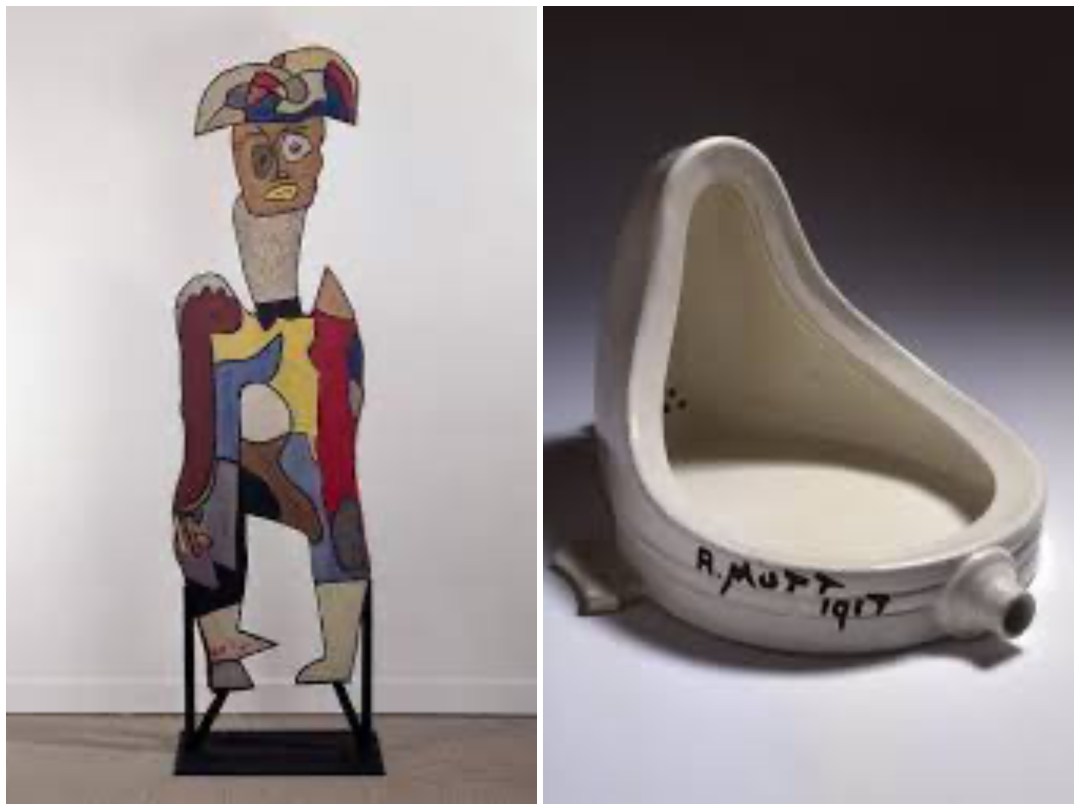
This paper aims to compare and contrast two iconic artworks from different periods: Gaston Chaissac’s Totem Double Face, painted in 1961, and Marcel Duchamp’s Fountain, created in 1917. Both artworks challenge traditional notions of art and introduce provocative ideas that have left a significant impact on the art world. By examining the historical and cultural context, artistic techniques, and underlying conceptual frameworks of these two pieces, we can gain a deeper understanding of their unique contributions to the evolution of art.
Marcel Duchamp’s Fountain emerged during the early 20th century, a time marked by radical shifts in artistic conventions and societal norms. As a member of the Dada movement, Duchamp sought to challenge traditional artistic values and question the definition of art itself. Duchamp’s Fountain, a urinal turned upside down and signed with the pseudonym “R. Mutt,” provoked controversy by testing the boundaries of artistic expression and challenging the art establishment.
In contrast, Gaston Chaissac’s Totem Double Face was created in 1961, during a period of post-World War II reconstruction and artistic experimentation. Chaissac was associated with Art Brut, or Outsider Art, a movement that celebrated unconventional artistic practices and emphasized raw creativity and self-expression. Totem Double Face exemplifies Chaissac’s distinctive style, characterized by vivid colours, childlike simplicity, and a direct connection to the artist’s personal experiences and emotions.
Duchamp’s Fountain challenged traditional artistic techniques by presenting a ready-made object as a work of art. By appropriating a mass-produced urinal and presenting it in a gallery setting, Duchamp elevated the mundane into the realm of art. The act of selection and re-contextualization was Duchamp’s artistic gesture, which relied on intellectual and conceptual provocations rather than traditional artistic skill.
Chaissac’s Totem Double Face, on the other hand, showcases the artist’s skillful use of materials and techniques within a more traditional framework. His painting technique combines elements of abstraction and figuration, employing bold brushstrokes, vibrant colours, and simplified forms. The expressive nature of Chaissac’s work conveys a sense of immediacy and emotional intensity, reflecting his personal experiences and inner world.
Both artworks challenge the notion of authorship and originality in art. Duchamp’s Fountain blurred the lines between artist and viewer, as the mere act of selecting and presenting an object as art questioned the artist’s traditional role as a skilled craftsman. This challenged the concept of the unique, original artwork and opened up new possibilities for conceptual and idea-based art.
In Totem Double Face, Chaissac’s emphasis on personal expression and his connection to Art Brut disrupts the conventional hierarchy of fine art. His work stands as a testament to the power of individual creativity and the liberation from academic norms. Chaissac’s approach reflects a rejection of the institutionalized art world and highlights the importance of artistic freedom and authenticity.
While both Gaston Chaissac’s Totem Double Face and Marcel Duchamp’s Fountain represent significant departures from traditional artistic conventions, they do so in distinct ways. Duchamp’s Fountain challenged the concept of authorship and the definition of art itself by presenting a mass-produced object as a work of art. In contrast, Chaissac’s Totem Double Face emphasized personal expression, rejecting academic norms and highlighting the raw, authentic creativity associated with Art Brut. These two artworks continue to provoke discourse and inspire new artistic possibilities, demonstrating the enduring impact of their respective artists’ visions on the trajectory of contemporary art.
Discover more from The New Renaissance Mindset
Subscribe to get the latest posts sent to your email.
 The New Renaissance Mindset