
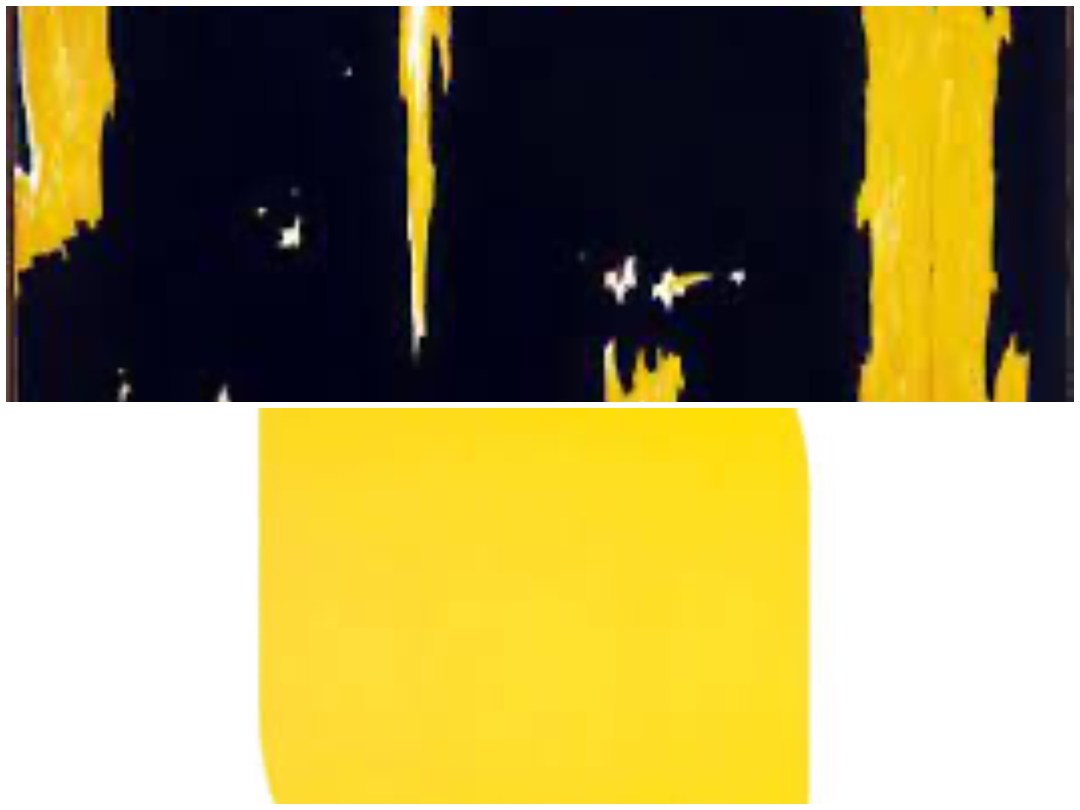
Ellsworth Kelly and Clyfford Still were influential artists during the mid-20th century, each contributing unique perspectives to the Abstract Expressionist movement. “Yellow Piece” and “1957 D-No.1” exemplify their individual artistic styles. This paper analyzes the formal elements, color usage, and underlying intentions of these paintings to shed light on their distinct approaches.
“Yellow Piece” displays Kelly’s minimalist aesthetic. The painting consists of a large, square canvas divided into two equal vertical rectangles of pure yellow. The clean lines and geometric precision embody Kelly’s interest in reducing art to its fundamental elements. In contrast, “1957 D-No.1” showcases Still’s characteristic colour field / abstract expressionist style, characterized by dynamic brushwork and a sense of raw energy. The canvas is dominated by bold black and red brushstrokes, layered with a textured surface. Still’s composition conveys a sense of movement and spontaneity.
Kelly’s “Yellow Piece” utilizes a single colour, yellow, which creates a vibrant and visually striking effect. The colour evokes feelings of warmth and energy, inviting viewers to engage with the painting. In contrast, Still’s “1957 D-No.1” incorporates a striking juxtaposition of black and red. The bold contrast between these colours generates a sense of tension and drama, adding depth and intensity to the composition. The use of colour in both paintings highlights the artists’ distinctive approaches to expressing emotion and engaging the viewer.
Kelly aimed to create art that was free from narrative or representation, focusing on the pure essence of form and colour. “Yellow Piece” embodies his desire to reduce art to its simplest elements, inviting viewers to engage with its visual impact rather than seeking deeper meaning. On the other hand, Still’s artistic intentions were rooted in existential concerns and emotional expression. “1957 D-No.1” reflects Still’s belief that art should evoke a profound emotional response from the viewer, conveying a sense of the sublime and the vastness of human experience.
Both paintings contribute to the broader art historical context of the mid-20th century. Kelly’s minimalist approach anticipated the emergence of minimalism as a prominent art movement in the 1960s, which emphasized the reduction of art to essential forms and colours. Still’s work, as an offspring of abstract expressionism, challenged the dominance of representational art and paved the way for subsequent movements like Color Field painting. Their contributions to art history reflect the evolving artistic landscape and the shift towards a more abstract and introspective approach.
The comparative analysis of “Yellow Piece” by Ellsworth Kelly and “1957 D-No.1” by Clyfford Still reveals the distinct artistic styles, colour usage, and intentions of these two artists. While Kelly embraced minimalism and focused on the essence of form and colour, Still’s abstract expressionism aimed to evoke profound emotional responses. Both paintings hold significant places within the art historical context of the mid-20th century, anticipating and influencing subsequent artistic movements. Through their distinct approaches, Kelly and Still contributed to the ongoing exploration and redefinition of artistic boundaries, creating enduring works of art that continue to captivate and inspire audiences.
Discover more from The New Renaissance Mindset
Subscribe to get the latest posts sent to your email.
 The New Renaissance Mindset