
Vincent Van Gogh, a renowned Dutch post-impressionist artist, left an indelible mark on the art world with his unique style and emotional depth. Two of his iconic works, “Irises” (1889) and “Wheat-field with Crows” (1890), serve as compelling examples of his artistic evolution during the final years of his life. This analysis aims to compare and contrast these paintings, exploring their subject matter, stylistic elements, and underlying emotions, while also considering the personal circumstances surrounding their creation.
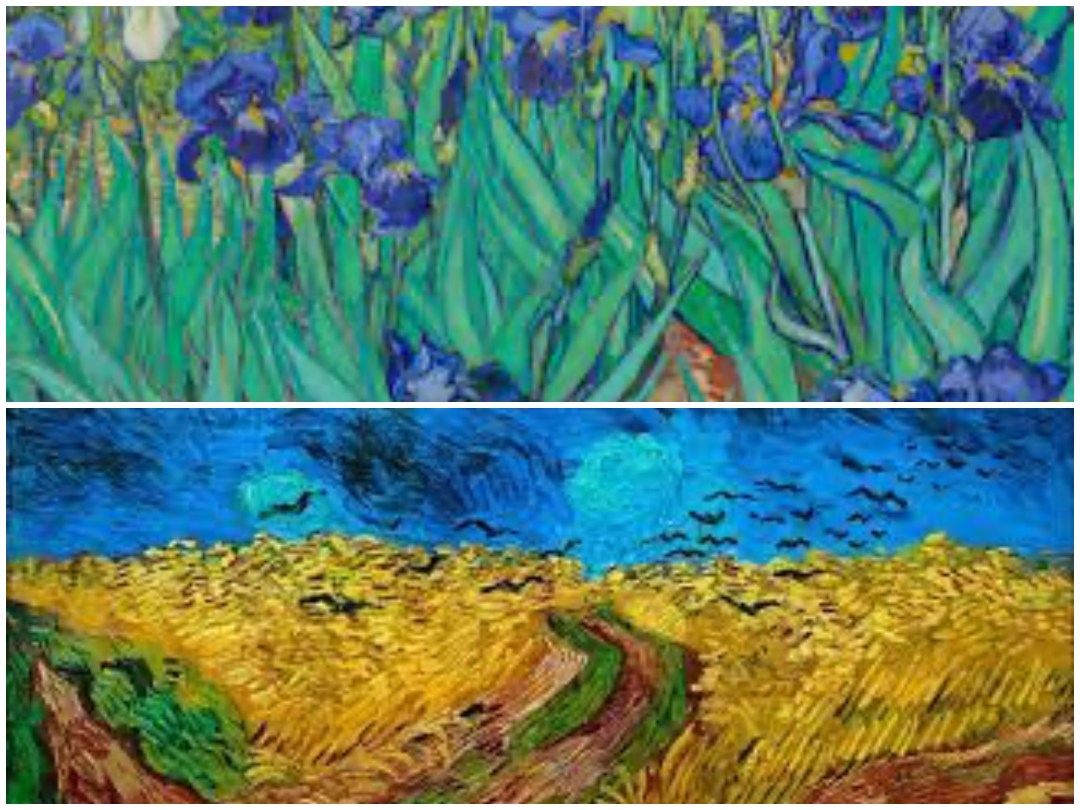
“Irises” and “Wheat-field with Crows” differ significantly in their subject matter. “Irises” depicts a vibrant bouquet of flowers in a carefully arranged composition, showcasing Van Gogh’s fascination with nature’s beauty and his exploration of colour symbolism. On the other hand, “Wheat-field with Crows” portrays a desolate landscape with a foreboding sky and a solitary path leading towards a group of crows, hinting at Van Gogh’s introspection and his struggle with mental anguish.
Both paintings showcase Van Gogh’s distinctive style, characterized by bold brushstrokes and intense colours. In “Irises,” the artist employs short, dynamic brushwork to create a sense of movement, capturing the delicate details of each flower. The use of complementary colours, such as the vibrant blue irises against the warm yellow background, adds to the visual impact. In contrast, “Wheat-field with Crows” features more pronounced and elongated brushstrokes, lending a sense of energy and restlessness to the scene. The dark, swirling sky contrasts sharply with the golden wheat field, creating a powerful visual tension.
“Irises” and “Wheat-field with Crows” convey contrasting emotional states. “Irises” emanates a sense of tranquility and serenity, reflecting Van Gogh’s appreciation for nature’s harmonious beauty. The choice of irises, known to symbolize hope and faith, adds a layer of optimism to the painting. Conversely, “Wheat-field with Crows” evokes a darker and more foreboding mood. The agitated brushstrokes, the tumultuous sky, and the presence of crows, often associated with death and despair, convey a feeling of impending doom. Some art historians even interpret this painting as a reflection of Van Gogh’s own inner turmoil.
The creation of these two paintings took place during a tumultuous period in Van Gogh’s life. “Irises” was painted during his voluntary confinement at the Saint-Paul-de-Mausole asylum in Saint-Rémy-de-Provence, where he sought treatment for his mental health issues. The presence of vibrant irises in the painting could be seen as an attempt to find solace and escape from his inner struggles. In contrast, “Wheat-field with Crows” was completed shortly before Van Gogh’s tragic suicide, suggesting a more somber and introspective mindset.
Van Gogh’s “Irises” and “Wheat-field with Crows” offer a fascinating glimpse into the artist’s evolving style and emotional state during the final years of his life. While “Irises” celebrates the beauty of nature and symbolizes hope, “Wheat-field with Crows” portrays a darker, more introspective side of Van Gogh’s psyche. The contrasting subject matter, stylistic elements, and emotional depth of these paintings reflect the profound impact of Van Gogh’s personal experiences on his artistic expression. These masterpieces continue to captivate audiences, inviting contemplation and admiration for the enduring legacy of Vincent Van Gogh’s art.
Discover more from The New Renaissance Mindset
Subscribe to get the latest posts sent to your email.
 The New Renaissance Mindset