
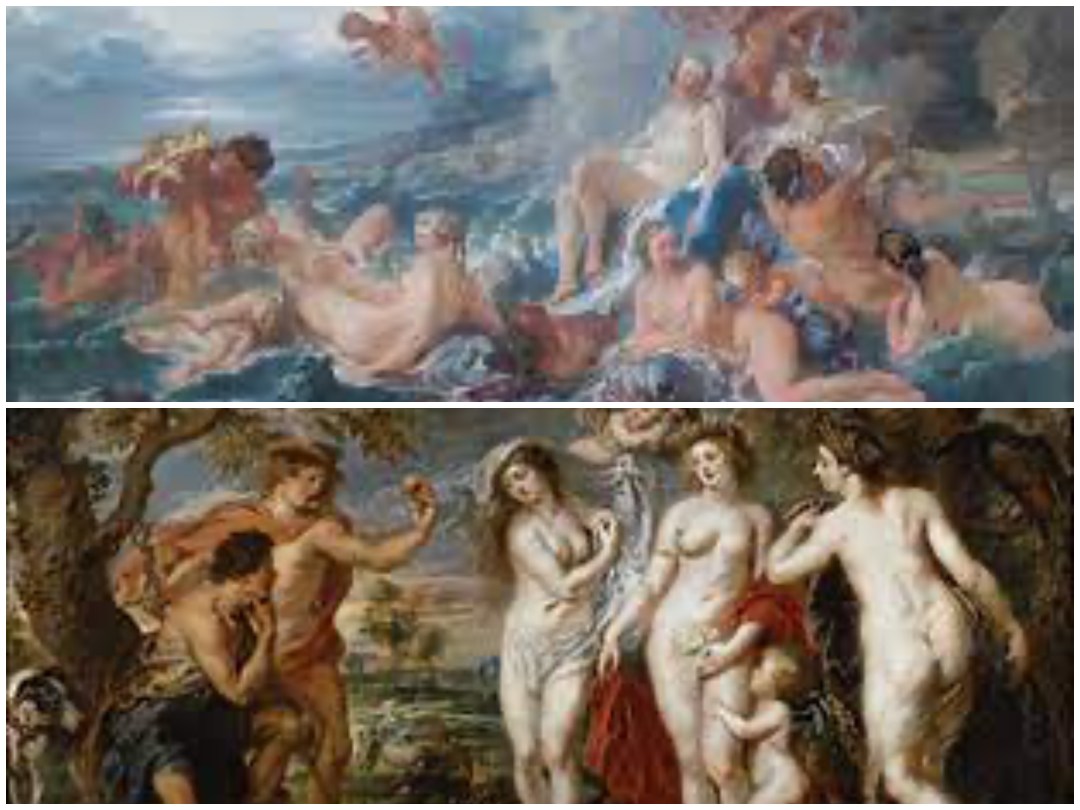
Art history is replete with countless masterpieces that explore various themes and techniques. Two notable works, François Boucher‘s Triumph of Venus and Peter Paul Rubens‘ The Judgement of Paris, are significant examples of Baroque and Rococo art, respectively. This analysis aims to compare and contrast these paintings, considering their composition, subject matter, artistic styles, and underlying messages.
The Triumph of Venus portrays the Roman goddess of love and beauty surrounded by a group of cherubic putti, engaging in a playful scene. Venus stands at the centre, draped in luxurious fabrics, with a serene expression as she gazes at herself in a mirror held by Cupid. The composition is harmonious, with a soft colour palette and gentle curves, creating a sensuous and dreamlike atmosphere.
In contrast, The Judgement of Paris depicts a narrative from Greek mythology, where Paris, a Trojan prince, is tasked with judging the beauty of three goddesses: Aphrodite, Hera, and Athena. The composition is dynamic and energetic, with the figures arranged in a triangular formation. The painting exudes a sense of movement, with fluttering drapery and gestural poses, capturing the tension and anticipation of the moment.
Triumph of Venus exemplifies the Rococo style, which emerged in the 18th century. Boucher’s brushwork is delicate, with soft transitions between colours and a focus on decorative elements. The figures are rendered with idealized beauty, smooth skin tones, and sensual forms. The overall effect is one of elegance, grace, and refinement.
Rubens’ The Judgement of Paris, on the other hand, showcases the Baroque style. Rubens employed bold and vigorous brushwork, emphasizing dynamic contrasts of light and shadow.
The figures possess robust physiques, expressive faces, and a heightened sense of movement. Rubens’ use of vibrant colours and dramatic chiaroscuro adds a sense of theatricality and emotional intensity to the scene.
Boucher’s Triumph of Venus reflects the Rococo fascination with love, beauty, and pleasure. The painting celebrates the sensual aspects of femininity and the indulgence in romantic love. Venus, as the embodiment of love and desire, is central to the composition, symbolizing the pursuit of pleasure and the transient nature of beauty.
The Judgement of Paris by Rubens embodies the Baroque penchant for grand narratives and heroic themes. The painting explores the themes of beauty, power, and the consequences of choice. Paris’ dilemma represents the struggle between divine forces and human desires. Ultimately, his choice of Aphrodite, the goddess of love, leads to the Trojan War, underscoring the destructive potential of beauty and desire.
In comparing and contrasting Boucher’s Triumph of Venus and Rubens’ The Judgement of Paris, it becomes evident that both paintings reflect the artistic and cultural sensibilities of their respective periods. While Triumph of Venus focuses on elegance, refinement, and the celebration of sensuality, The Judgement of Paris embodies the dynamism, theatricality, and narrative complexity of the Baroque era. These works stand as testaments to the diverse artistic styles and underlying messages found within the broader historical context of art history.
Discover more from The New Renaissance Mindset
Subscribe to get the latest posts sent to your email.
 The New Renaissance Mindset