
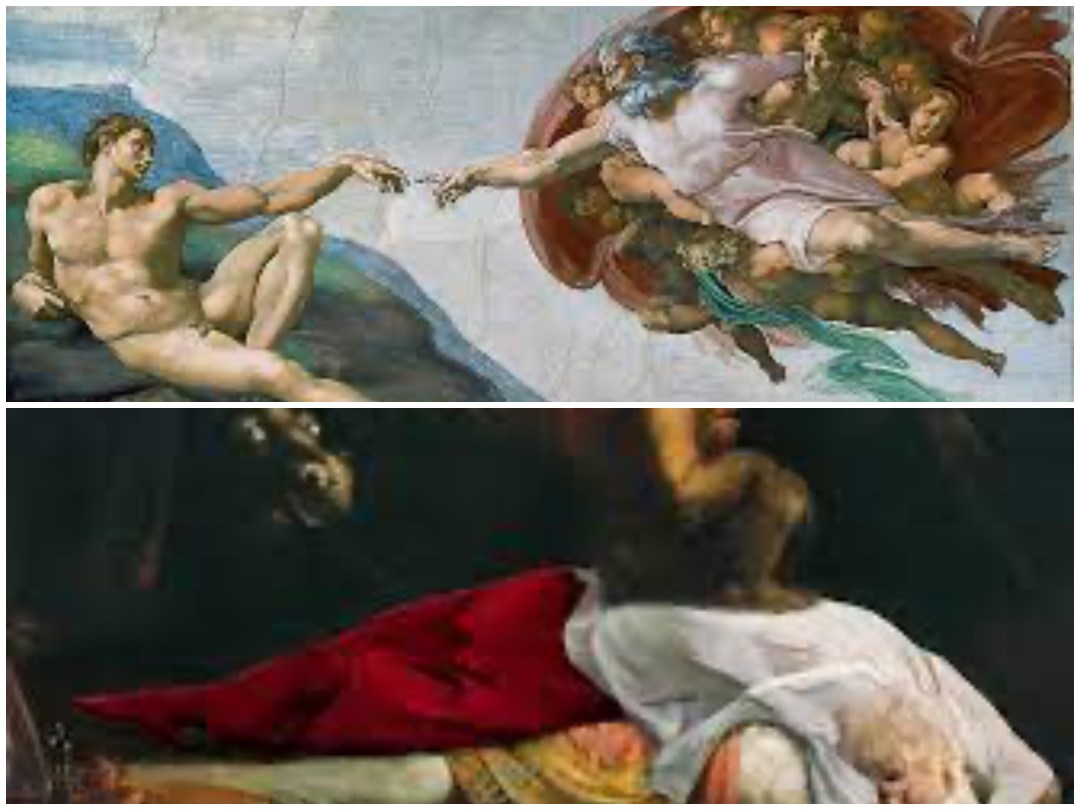
Art history encompasses a vast array of works from different periods, each bearing unique styles, themes, and cultural influences. This analysis focuses on two iconic artworks: Henry Fuseli‘s “The Nightmare” (1781) and Michelangelo‘s “The Creation of Adam” (1512). Both works demonstrate the artists’ exceptional talents and evoke powerful emotions. Through a comparative analysis, this study explores the contrasting aspects of these paintings, including their subject matter, style, composition, and symbolism.
“The Nightmare” and “The Creation of Adam” portray vastly different subject matter. Fuseli’s painting depicts a haunting, dream-like scene featuring a woman sleeping while a demonic creature perches upon her, evoking feelings of fear and unease. In contrast, Michelangelo’s fresco portrays the biblical narrative of God creating Adam, capturing the transcendent moment of divine intervention. The themes of fear and the supernatural dominate Fuseli’s work, while Michelangelo’s fresco embodies the religious and spiritual significance of creation.
Fuseli’s “The Nightmare” showcases a Romantic style, characterized by its emphasis on emotion, imagination, and the macabre. The painting employs chiaroscuro, casting deep shadows to heighten the dramatic effect. Fuseli’s meticulous rendering of textures and attention to detail lend an eerie realism to the scene. In contrast, Michelangelo’s fresco demonstrates a High Renaissance style, emphasizing proportion, harmony, and idealized figures. The fresco’s monumental scale and anatomical precision reflect Michelangelo’s mastery of the human form, as well as his mastery of fresco technique.
The composition of the two works also diverges significantly. Fuseli’s “The Nightmare” features a triangular arrangement, with the sleeping woman forming the base, the demonic creature atop her, and the ghostly horse in the background. This arrangement draws the viewer’s attention to the central figure, intensifying the sense of unease. In “The Creation of Adam,” Michelangelo employs a dynamic diagonal composition, with God and Adam stretching towards each other. The surrounding figures and architectural elements enhance the sense of movement and convey a divine energy.
Both paintings incorporate symbolic elements to convey deeper meanings. In “The Nightmare,” the horse with glowing eyes and the demonic creature symbolize the supernatural and subconscious fears that haunt the human psyche. The woman’s vulnerability underscores the theme of vulnerability in dreams. On the other hand, “The Creation of Adam” employs religious symbolism, with God and Adam reaching out towards each other, symbolizing the divine act of imparting life and intelligence. The surrounding figures, such as angels and prophets, represent a larger biblical narrative of creation and divine intervention.
Through a comparative analysis of Fuseli’s “The Nightmare” and Michelangelo’s “The Creation of Adam,” it becomes evident that both artworks showcase remarkable skill, creativity, and distinct styles. While Fuseli’s painting explores the dark recesses of the human mind, provoking fear and fascination, Michelangelo’s fresco represents the spiritual and transformative power of divine creation. By examining their subject matter, style, composition, and symbolism, we gain a deeper appreciation for the rich diversity within the realm of art history, as well as the profound impact that these works continue to have on viewers to this day.
Discover more from The New Renaissance Mindset
Subscribe to get the latest posts sent to your email.
 The New Renaissance Mindset