
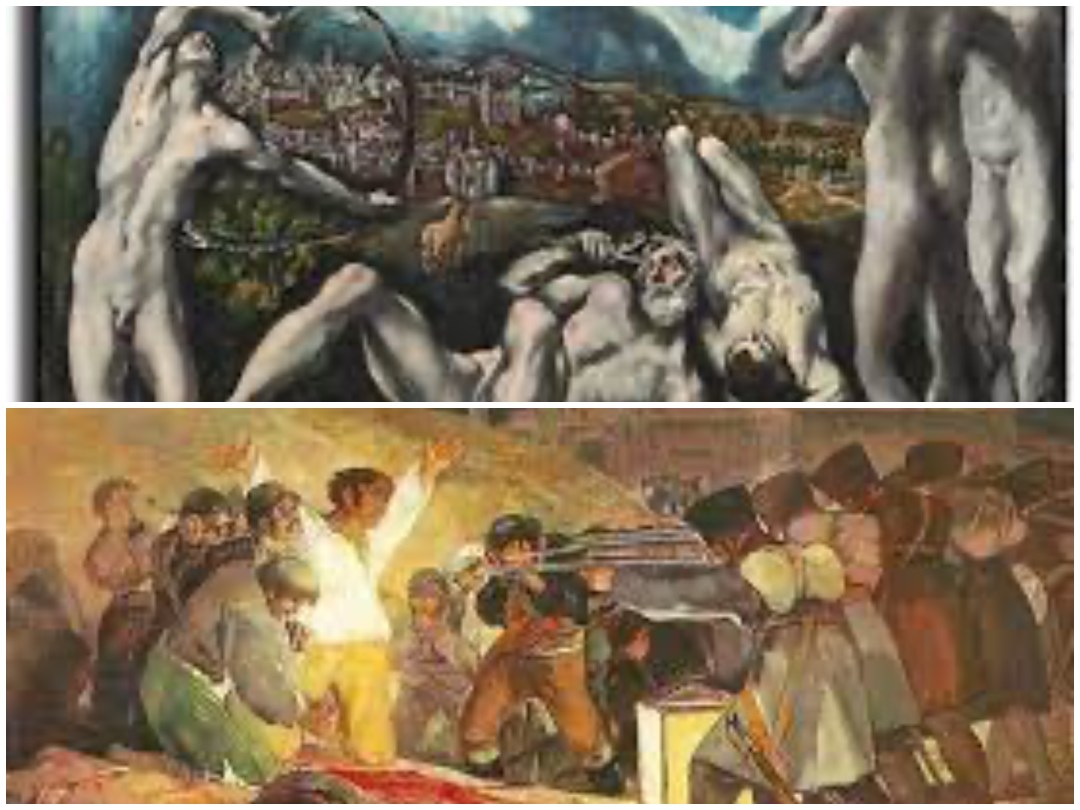
Art serves as a powerful medium to explore historical events and evoke emotional responses. The 1610 painting, “Laocoon,” by El Greco, and the 1808 painting, “Third of May,” by Francisco Goya, exemplify the distinct styles and intentions of two masterful artists from different periods. This analysis aims to compare and contrast these iconic works by examining their themes, techniques, and contextual influences.
El Greco’s “Laocoon” depicts the tragic tale from Greek mythology, where Laocoon and his sons are strangled by serpents as divine punishment. The painting captures the intense agony and despair of the figures, symbolizing the anguish and suffering of humanity. In contrast, Goya’s “Third of May” portrays a contemporary event—the execution of Spanish civilians by French soldiers during the Peninsular War. The painting conveys the brutality of war and the defiant courage of the victims, inviting viewers to reflect on the horrors of violence and oppression.
El Greco’s Mannerist style is characterized by elongated figures, vibrant colours, and dramatic lighting. In “Laocoon,” he employs exaggerated gestures and contorted poses to heighten the emotional impact. The use of contrasting colours, particularly the play between warm and cool tones, intensifies the emotional tension within the composition. Additionally, El Greco’s elongated figures convey a sense of spiritual and emotional elevation.
On the other hand, Goya’s “Third of May” demonstrates the artist’s mastery of the Romantic style. Goya employs bold brushstrokes, emphasizing light and dark contrasts to enhance the dramatic effect. The painting’s composition centres on the illuminated figure of the victim, emphasizing his isolation and vulnerability. Goya’s skillful use of chiaroscuro adds depth and creates a stark contrast between the victims and their faceless oppressors.
El Greco’s “Laocoon” reflects the artist’s deep religious devotion and his engagement with the Catholic Counter-Reformation. The painting embodies the spiritual struggles and religious conflicts of the time, capturing the heightened sense of drama and emotional turmoil prevalent in Mannerist art.
In contrast, Goya’s “Third of May” captures the spirit of the Enlightenment and its ideals of liberty, equality, and human rights. The painting reflects the socio-political context of the Napoleonic era, where Spanish citizens faced oppression and resistance. Goya’s empathetic portrayal of the victims and condemnation of violence align with the emerging spirit of nationalism and political consciousness in Europe.
El Greco’s “Laocoon” and Goya’s “Third of May” are remarkable works that exemplify the distinct styles and intentions of their respective artists. While El Greco’s painting delves into mythological themes and religious devotion, Goya’s work confronts the brutal realities of war and oppression. Through their innovative techniques and contextual influences, both paintings invite viewers to reflect on the universal human experiences of suffering, resilience, and the pursuit of justice. By examining these masterpieces, we gain a deeper understanding of the historical, cultural, and artistic developments that shaped these extraordinary works of art
Discover more from The New Renaissance Mindset
Subscribe to get the latest posts sent to your email.
 The New Renaissance Mindset