
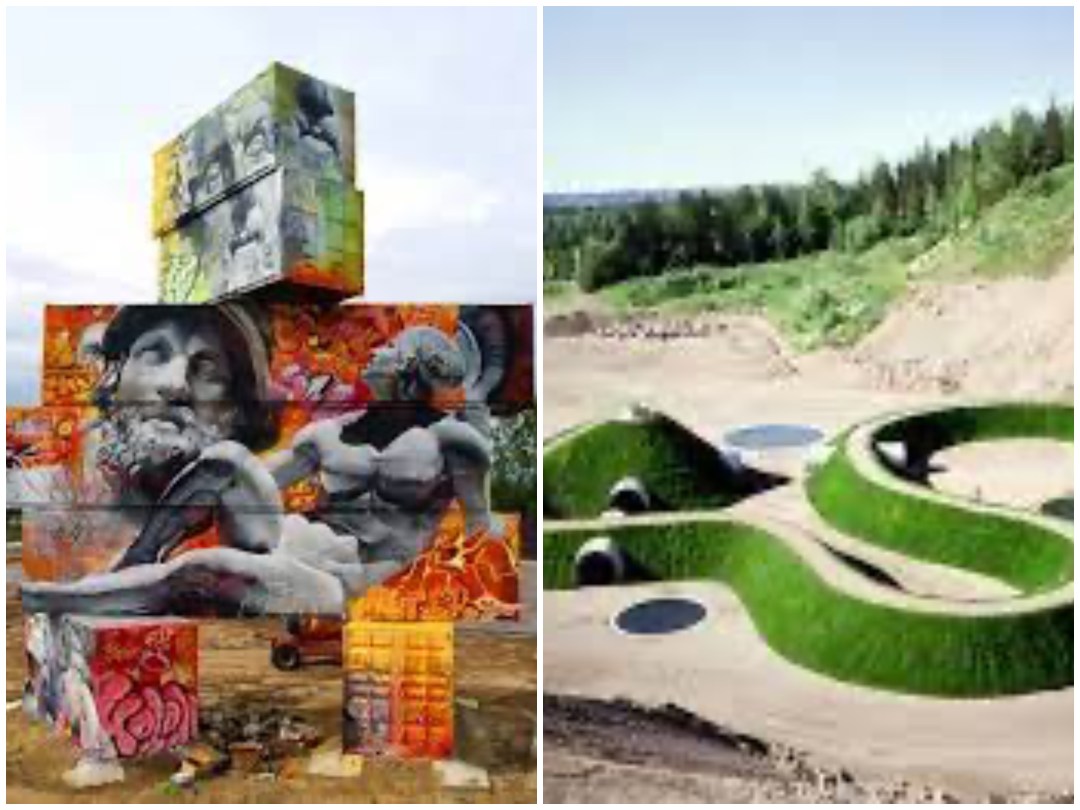
Public art has evolved over the years, reflecting the dynamic nature of contemporary society. This analysis aims to compare and contrast two distinct works of art: “Street Art” by Pichi and Avo, a 2014 mural, and “Up and Under” by Nancy Holt, a 1987 land artwork. Despite belonging to different genres and time periods, these artworks demonstrate significant similarities and differences in terms of their artistic intent, materials, context, and reception.
“Street Art” by Pichi and Avo is a large-scale mural characterized by a fusion of classical art and graffiti. It explores the contrast between ancient Greek sculptures and modern graffiti aesthetics, highlighting the juxtaposition of traditional and contemporary art forms. In contrast, “Up and Under” by Nancy Holt is a land artwork that incorporates the natural environment into the artistic experience. It focuses on the interplay between light and shadow, emphasizing the ephemeral nature of perception and the ever-changing relationship between the artwork and its surroundings.
The mural “Street Art” utilizes a combination of spray paint and stencilling techniques commonly associated with graffiti art. Pichi and Avo skillfully merge these techniques with the intricate detailing and texture of classical sculptures, creating a visually striking composition. On the other hand, “Up and Under” employs earthworks and sculpture elements, utilizing materials such as concrete, steel, and soil. Holt’s work engages with the landscape and the architectural environment, transforming it into an immersive experience through strategic placement and manipulation of materials.
“Street Art” by Pichi and Avo was created as part of a street art festival, aligning with the spirit of urban revitalization and public engagement. The mural represents the artists’ response to the vibrant street art culture and serves as an interactive platform for community dialogue. Conversely, “Up and Under” by Nancy Holt was conceived during a period when land art emerged as a movement, challenging the confines of traditional gallery spaces and questioning the relationship between art and nature. It aimed to redefine the viewer’s perception of the environment and explore the interconnectedness of art, landscape, and architecture.
“Street Art” by Pichi and Avo garnered significant attention from the public and the media due to its striking visual impact and unconventional blending of artistic styles. It sparked conversations about the role of street art in the urban landscape and prompted discussions on the preservation of public art in the face of graffiti removal policies. “Up and Under” by Nancy Holt, although less widely known to the general public, received critical acclaim within the art community. Its exploration of perception and environment challenged conventional notions of art and expanded the possibilities for artistic expression beyond traditional mediums.
While “Street Art” by Pichi and Avo and “Up and Under” by Nancy Holt represent different genres, materials, contexts, and receptions, they both exemplify the transformative power of public art. Through their distinctive approaches, these artworks engage viewers, provoke contemplation, and contribute to the evolution of artistic discourse. Despite the temporal and stylistic disparities, both works serve as testament to the resilience of art as a means of social commentary, cultural expression, and aesthetic exploration.
Discover more from The New Renaissance Mindset
Subscribe to get the latest posts sent to your email.
 The New Renaissance Mindset