
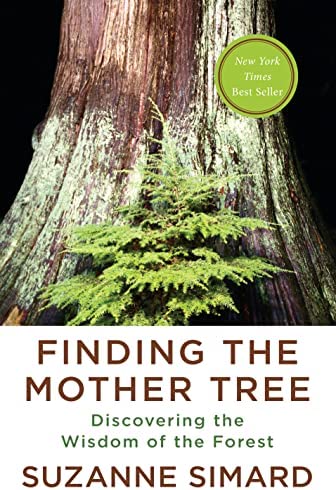
In Finding the Mother Tree, ecologist Suzanne Simard invites readers into the hidden, exquisite communication network of forests, weaving together rigorous science, personal memoir, and a call to ‘re-conceive’ humanity’s relationship with the natural world. The result is neither dry technical treatise nor sentimental nature writing, but a compelling hybrid that marries empirical inquiry with a profound sense of wonder and moral urgency.
Synopsis and Structure
Simard organizes the narrative around her decades-long research into temperate rainforest ecology in British Columbia. Each chapter alternates between moments in the lab and field—novel experiments with isotopic tracers, long days planting seedlings beneath towering cedars—and recollections of her upbringing in a logging family. This dual structure underscores her central thesis: that trees are neither solitary competitors nor mere resources, but participants in a vast, cooperative community. The book crescendos in the titular concept of “mother trees,” exceptionally large, old individuals that serve as hubs, sending nutrients and signals through fungal networks to support younger saplings.
Thematic Depth and Scholarly Contribution
At the heart of Simard’s argument lies a radical challenge to entrenched ideas of competition as the driving force in plant ecology. Drawing on over twenty years of controlled experiments and observational data, she demonstrates that conspecific and even interspecies trees exchange carbon, water, and defense signals via mycorrhizal fungi. In so doing, Simard reframes the forest as a social organism—an ecosystemic community bound by reciprocity. This shift has far-reaching implications for forestry practices: clear-cutting, she argues, severs these vital connections and undermines forest resilience.
From a scholarship perspective, Simard’s work exemplifies translational ecology. She synthesizes data from stable-isotope labeling studies, geospatial mapping, and long-term monitoring plots, while engaging critically with the socio-economic forces governing timber extraction. Her integration of indigenous knowledge—recognizing that First Nations have long observed relational attributes in trees—further enriches the book’s interdisciplinarity.
Literary Style and Narrative Voice
Simard’s prose balances precision and lyricism. Technical descriptions of isotopic fractionation and root architecture are clear yet never so stripped of metaphor as to feel arid. Conversely, her meditations on childhood in the logging camps—her father’s ambivalence toward clear-cutting, her mother’s solace found beneath fir boughs—imbue the text with emotional resonance. Passages such as her first sighting of the massive “mother tree” read with a kind of poetic intimacy, drawing the reader into scientific revelation as a lived, visceral experience.
Moreover, Simard manages the difficult act of popular science writing: authorial humility. She frequently acknowledges uncertainties—alternative explanations for nutrient flows, the limitations of extrapolating small-plot findings to global forest dynamics—lending the narrative credibility and inviting ongoing inquiry rather than final answers.
Significance and Legacy
Finding the Mother Tree arrives at a cultural moment hungry for ecological imagination. It frames the forest as a model for human communities, suggesting that collaboration, long-term thinking, and respect for elders (both arboreal and human) are integral to collective flourishing. As climate change accelerates, Simard’s insights offer a blueprint for more regenerative forestry policies—selective logging protocols that preserve “mother” individuals, restoration plantings designed around mycorrhizal connectivity, and greater inclusion of indigenous stewardship practices.
By bridging the personal and the universal, the empirical and the ethical, Simard has produced a work that transcends academic silos. It stands as both a scientific milestone and a manifesto for re-envisioning our kinship with the more-than-human world.
Suzanne Simard’s Finding the Mother Tree is a landmark contribution to environmental literature: scientifically rigorous yet deeply humane, it marries data and narrative in service of a hopeful yet urgent vision. For readers seeking to understand not only how forests function, but why they matter for the future of life on Earth, this book is indispensable.
Discover more from The New Renaissance Mindset
Subscribe to get the latest posts sent to your email.
 The New Renaissance Mindset