
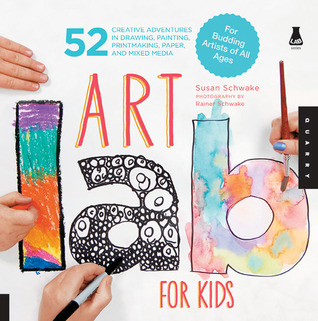
Susan Schwake’s approach in this compact manual is quietly ambitious: deliver fine-art experiences in short, repeatable labs so that a parent, teacher, or small-group leader can run a semester’s worth of explorations with minimal prep and maximum creative payoff. The book is organized as six units (Drawing; Painting; Printmaking; Paper; Mixed Media; plus usage/how-to material) … Continue reading The Adaptable Educator’s Book Review – Art Lab for Kids: 52 Creative Adventures in Drawing, Painting, Printmaking, Paper, and Mixed Media by Susan Schwake

The Adaptable Educator’s Book Review – 101 Kids Activities That Are the Bestest, Funnest Ever!: The Entertainment Solution for Parents, Relatives, and Babysitters by Holly Homer and Rachel Miller
Holly Homer and Rachel Miller’s 101 Kids Activities That Are the Bestest, Funnest Ever! reads like a manifesto for the revival of unstructured play, a bold rejoinder to the regimented schedules and screen-centric routines common in twenty‑first‑century childhood. At first glance, the exuberant title—with its intentional grammatical liberties (“bestest,” “funnest”)—signals an authorial choice to privilege the’s child’s-eye … Continue reading The Adaptable Educator’s Book Review – 101 Kids Activities That Are the Bestest, Funnest Ever!: The Entertainment Solution for Parents, Relatives, and Babysitters by Holly Homer and Rachel Miller

Weekend Book Reviews: STEAM Kids: 50+ Science / Technology / Engineering / Art / Math Hands-On Projects for Kids by Anne Carey
Anne Carey's "STEAM Kids" is a delightful and informative compendium designed to ignite the curiosity and creativity of young minds through engaging projects that span the realms of Science, Technology, Engineering, Art, and Mathematics (STEAM). Aimed at children and educators alike, this book presents over 50 hands-on activities that seamlessly blend these disciplines, encouraging interdisciplinary … Continue reading Weekend Book Reviews: STEAM Kids: 50+ Science / Technology / Engineering / Art / Math Hands-On Projects for Kids by Anne Carey
Avanzando en el Holismo Educativo: Integración de la Carpintería Tradicional en los Espacios de Creación de Escuelas Primarias
Resumen: Esta propuesta explora los posibles beneficios de reintroducir planes de estudio tradicionales de carpintería de escuelas secundarias en entornos de escuelas primarias como parte de los espacios de creación. Al alinearse con los paradigmas educativos contemporáneos que enfatizan el aprendizaje experiencial y el desarrollo holístico, la incorporación de actividades de carpintería puede fomentar un … Continue reading Avanzando en el Holismo Educativo: Integración de la Carpintería Tradicional en los Espacios de Creación de Escuelas Primarias
Avancer vers l’holisme éducatif: Intégration de la menuiserie traditionnelle dans les espaces créatifs des écoles élémentaires
Abstrait: Cette proposition explore les avantages potentiels de réintroduire les programmes de menuiserie traditionnelle des lycées dans les contextes des écoles élémentaires, en tant que partie intégrante des espaces créatifs. En s'alignant sur les paradigmes éducatifs contemporains mettant l'accent sur l'apprentissage expérientiel et le développement holistique, l'intégration d'activités de menuiserie peut favoriser un environnement d'apprentissage … Continue reading Avancer vers l’holisme éducatif: Intégration de la menuiserie traditionnelle dans les espaces créatifs des écoles élémentaires
Advancing Educational Holism: Integrating Traditional Woodworking into Elementary School Maker Spaces
Abstract: This proposal explores the potential benefits of reintroducing traditional woodworking curricula from high schools into elementary school settings as part of maker spaces. By aligning with contemporary educational paradigms emphasizing experiential learning and holistic development, the incorporation of woodworking activities can foster a rich, interdisciplinary learning environment for young learners. Elementary education has evolved … Continue reading Advancing Educational Holism: Integrating Traditional Woodworking into Elementary School Maker Spaces
Why complete a course in Maker Spaces in Education
Years ago in m y role of consultant, I was privileged to be introduced to discovery-based pedagogy called The Reggio-Emelia Approach. This experiential learning method of teaching has become the foundation of my teaching philosophy and it is part of why I decided to get my teaching licence as an art specialist: it permits me … Continue reading Why complete a course in Maker Spaces in Education

 The New Renaissance Mindset