
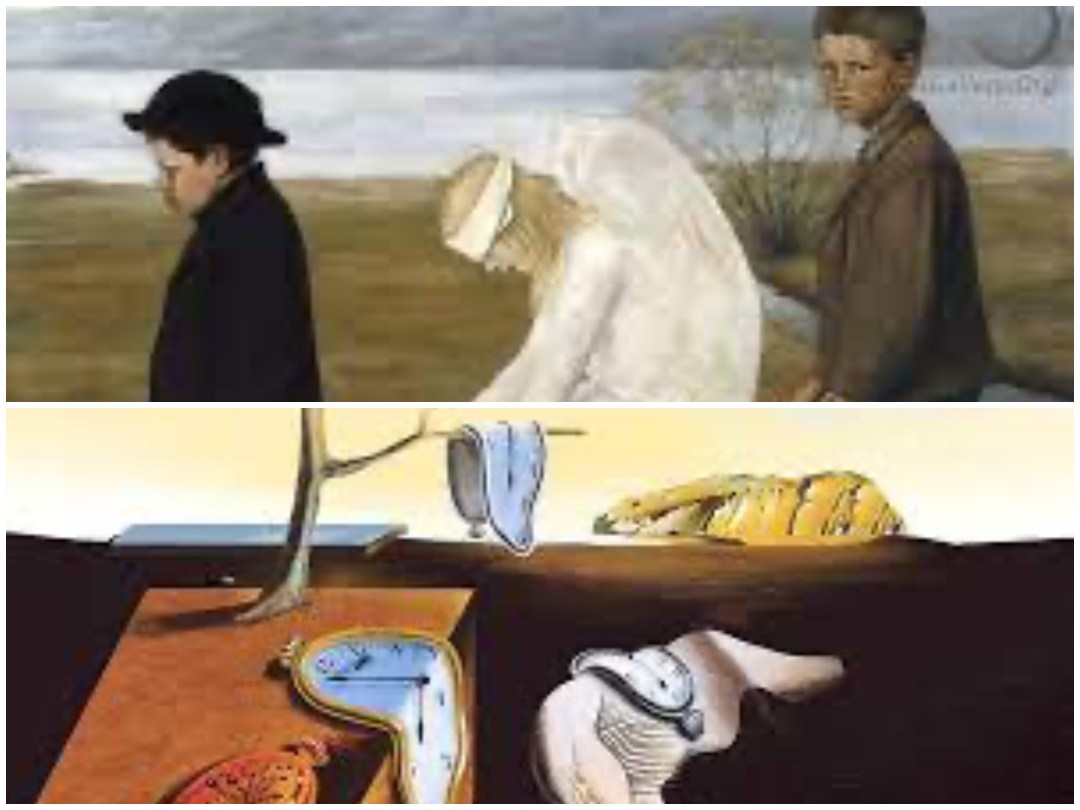
Artistic expression has long served as a medium for conveying complex emotions and ideas. This paper aims to compare and contrast two renowned paintings from different eras: “The Wounded Angel” (1903) by Hugo Simberg and “The Persistence of Memory” (1931) by Salvador Dalí. Through a comparative analysis of these artworks, we will explore their thematic concerns, visual techniques, and their impact on the viewer.
Both paintings delve into profound and introspective themes. Simberg’s “The Wounded Angel” depicts an angel with bandaged wings, accompanied by a group of young boys. The painting explores the concept of suffering, death, and the vulnerability of innocence. In contrast, Dalí’s “The Persistence of Memory” presents a surreal dreamscape, featuring melting watches and a desolate landscape. It contemplates the fluidity of time, the subjective nature of reality, and the transience of existence.
Simberg employs a subdued colour palette and a delicate, ethereal quality in his painting. The use of soft, pastel hues and the hazy background contribute to a sense of otherworldliness and tranquility. The contrast between the pale angel and the vibrant red flowers emphasizes the wounded state of the celestial figure. On the other hand, Dalí employs precise, realistic details juxtaposed with dreamlike elements. The melting watches, distorted landscape, and unexpected juxtapositions create a disorienting effect, challenging the viewer’s perception of reality.
Simberg’s “The Wounded Angel” evokes a contemplative response from the viewer through its poignant portrayal of suffering and innocence. The wounded angel, with its solemn gaze and bandaged wings, invites empathy and introspection. The presence of the young boys, seemingly oblivious to the angel’s pain, adds an element of mystery and invites interpretation. In contrast, Dalí’s “The Persistence of Memory” offers a disconcerting experience, eliciting a sense of the uncanny. The melting watches, symbols of the fluidity of time, challenge conventional notions of temporality and provoke reflection on the nature of existence.
“The Wounded Angel” by Hugo Simberg and “The Persistence of Memory” by Salvador Dalí are seminal artworks that explore profound themes and captivate viewers through distinct visual techniques. Simberg’s painting delves into the vulnerability of innocence and the enigma of suffering, inviting introspection and empathy. Dalí’s work challenges our perception of reality, time, and existence through its surreal and dreamlike elements. While Simberg’s piece conveys a sense of serenity and reflection, Dalí’s painting is disconcerting, evoking the uncanny. Despite their differences, both artworks leave a lasting impression on the viewer, highlighting the enduring power of artistic expression.
Discover more from The New Renaissance Mindset
Subscribe to get the latest posts sent to your email.
 The New Renaissance Mindset