

Jean Giono’s The Man Who Planted Trees (original French L’homme qui plantait des arbres) is a tiny masterpiece of moral imagination: an elegant parable that compresses a century’s worth of catastrophe and repair into a single, quietly luminous tale. First published in 1953, the story trades the grandiloquence of polemic for the modesty of witness, … Continue reading The Adaptable Educator’s Book Review – The Man Who Planted Trees by Jean Giono
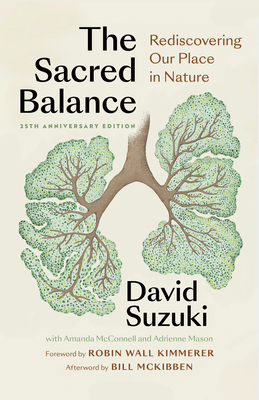
The Adaptable Educator’s Book Review – The Sacred Balance, 25th Anniversary Edition, by David Suzuki
David Suzuki’s The Sacred Balance returns in a thoughtful 25th-anniversary edition that reads less like a retread and more like a conversation re-opened across decades. This edition—issued by Greystone with a new foreword by Robin Wall Kimmerer and an afterword by Bill McKibben—pairs Suzuki’s lucid synthesis of ecology and ethics with two contemporary interlocutors whose … Continue reading The Adaptable Educator’s Book Review – The Sacred Balance, 25th Anniversary Edition, by David Suzuki

Rethinking Modernity: Charles Taylor’s Vision for Sustainable Alternatives to Colonialism, Nationalism, Imperialism, and Capitalism
Charles Margrave Taylor, a prominent philosopher, has contributed significantly to our understanding of modernity, identity, and political theory. His work offers a valuable lens to examine the interconnectivity and unsustainability of colonialism, nationalism, imperialism, and capitalism. Let's explore these concepts through Taylor's perspectives and then discuss sustainable alternatives with real-world examples. Interconnectivity and Unsustainability Colonialism … Continue reading Rethinking Modernity: Charles Taylor’s Vision for Sustainable Alternatives to Colonialism, Nationalism, Imperialism, and Capitalism
Towards Ecological Justice: Rethinking Systems of Power and Sustainability Beyond Colonialism, Nationalism, Imperialism, and Capitalism
Vincent Y. Mudimbe's work provides a critical lens through which we can examine the interconnectedness and unsustainability of colonialism, nationalism, imperialism, and capitalism. These systems are deeply intertwined and have historically reinforced each other, leading to exploitation, inequality, and ecological degradation. Interconnectivity of Colonialism, Nationalism, Imperialism, and Capitalism: Colonialism and Capitalism: Colonialism provided the economic … Continue reading Towards Ecological Justice: Rethinking Systems of Power and Sustainability Beyond Colonialism, Nationalism, Imperialism, and Capitalism
Fractured Narratives: The Collapse of Colonialism, Nationalism, Imperialism, and Capitalism in the Postmodern Era
Jean-François Lyotard, a prominent postmodern philosopher, provides a nuanced framework for understanding the interconnectivity and unsustainability of colonialism, nationalism, imperialism, and capitalism through his critique of metanarratives and his exploration of power dynamics in the postmodern condition. Interconnectivity Metanarratives and Power Structures: Lyotard’s critique of metanarratives, which are grand, overarching stories that societies use to … Continue reading Fractured Narratives: The Collapse of Colonialism, Nationalism, Imperialism, and Capitalism in the Postmodern Era

Harmonizing Humanity: A Taoist Perspective on Sustainable Alternatives to Colonialism, Nationalism, Imperialism, and Capitalism
Drawing on Lao Tzu's philosophies, we can explore the interconnected nature and unsustainability of colonialism, nationalism, imperialism, and capitalism through the lens of Taoist principles of harmony, balance, and natural order. Interconnectivity and Unsustainability: Colonialism disrupts the natural harmony by imposing foreign rule and exploitation, leading to social, cultural, and environmental imbalance. Nationalism often fosters … Continue reading Harmonizing Humanity: A Taoist Perspective on Sustainable Alternatives to Colonialism, Nationalism, Imperialism, and Capitalism
Towards a Compassionate Economy: Jesus’ Philosophy and a Sustainable Alternative to Global Exploitation
Drawing on the philosophies attributed to Jesus Christ, we can explore themes of justice, compassion, and community to critique colonialism, nationalism, imperialism, and capitalism, and propose a sustainable alternative system. Critique of Colonialism, Nationalism, Imperialism, and Capitalism: Colonialism: Jesus' teachings emphasize the dignity and equality of all people. Colonialism often exploits and oppresses indigenous populations, … Continue reading Towards a Compassionate Economy: Jesus’ Philosophy and a Sustainable Alternative to Global Exploitation
Redefining Interconnected Systems: Towards Sustainable Alternatives in the Spirit of Neil deGrasse Tyson
Neil deGrasse Tyson, a prominent astrophysicist, often discusses the interconnectedness of all things in the universe. Applying this perspective to human systems like colonialism, nationalism, imperialism, and capitalism reveals their intertwined nature and the sustainability challenges they pose. Interconnectivity and Unsustainability Colonialism and Imperialism: Historically, colonialism and imperialism have exploited resources, cultures, and peoples of … Continue reading Redefining Interconnected Systems: Towards Sustainable Alternatives in the Spirit of Neil deGrasse Tyson
Towards Sustainable Futures: Deconstructing Colonialism, Nationalism, Imperialism, and Capitalism Through Anarchist Principles and Modern Alternatives
Voltairine de Cleyre was an anarchist and feminist thinker known for her critiques of authority and hierarchy, which are central to understanding her views on colonialism, nationalism, imperialism, and capitalism. Interconnectivity and Unsustainability Colonialism: De Cleyre would argue that colonialism is inherently unsustainable because it relies on the exploitation and domination of indigenous peoples and … Continue reading Towards Sustainable Futures: Deconstructing Colonialism, Nationalism, Imperialism, and Capitalism Through Anarchist Principles and Modern Alternatives
Harmony Beyond Borders: A Buddhist-inspired Vision for Sustainable Global Equity
Drawing on Buddhist philosophies provides a profound lens through which to analyze and critique systems like colonialism, nationalism, imperialism, and capitalism. Let's delve into each and then explore a sustainable alternative. Colonialism and Imperialism: These systems are rooted in the idea of domination and exploitation, where one group or nation asserts control over others for … Continue reading Harmony Beyond Borders: A Buddhist-inspired Vision for Sustainable Global Equity
 The New Renaissance Mindset