
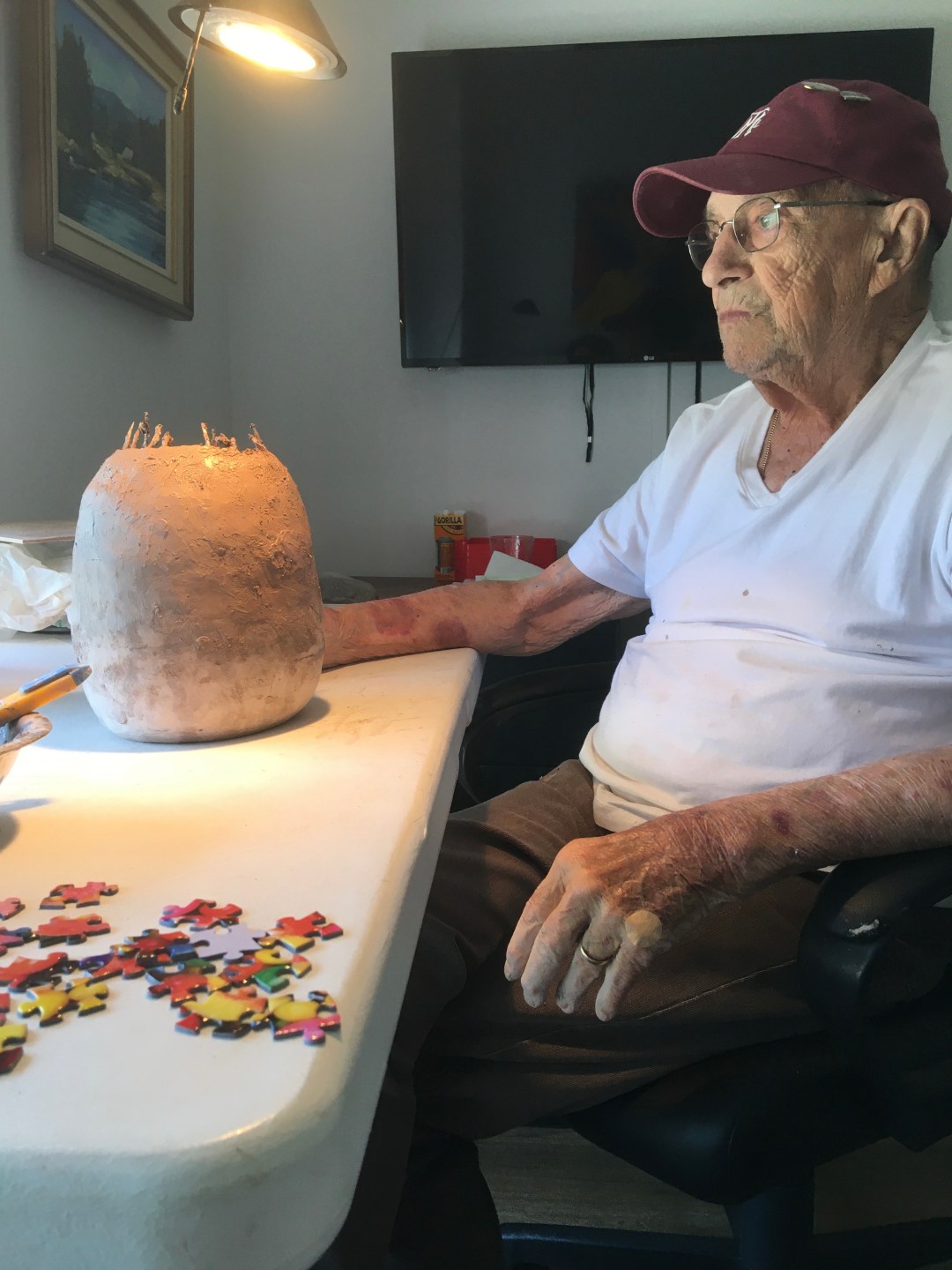
Rest in Peace, Dad. My father died on Saturday, August 5th, 2023 (Born Dec 20th, 1930). We continue to be blessed to have had you in our lives.
In the final weeks he was surrounded by his devoted and loving wife of 68 years, and members of our family. The loss is hitting each of us differently and giving more questions about my reaction than answers. perhaps this is as it should be… slow reflection inspired by beautiful memories; gradual moments of introspection and acceptance. As I’ve been doing these past weeks, I’ve turned to philosophers, poets, and artists to help me prepare to accept and understand this inevitable part of life. What follows is an imagined discussion between students of Epictetus, seeking to understand how one can feel relief at the end of a loved one’s suffering, guilt at that sense of relief, and confusion about what it is supposed to feel like to no longer have this person physically around.
Aelius: Greetings, fellow seekers of wisdom. Today, let us delve into the intricate labyrinth of emotions that ensnare us when we confront the passing of a loved one, particularly a father figure. The tangle of feelings that arises in such moments often defies our understanding. The confusion of grief mixed with an unexpected sense of relief, and the guilt that accompanies it, highlights the complexity of our human experience.
Theon: Indeed, Aelius. The ebb and flow of emotions following the loss of a father can be baffling. The relief we feel might stem from witnessing the end of their suffering, but it clashes with our overwhelming grief, causing us to question the legitimacy of our feelings. It’s as if we’re caught between honoring our sorrow and acknowledging the release from the burden of seeing our loved one suffer.
Callista: I concur, Theon. This internal struggle is a manifestation of our profound connection with our father. The grief we feel is a testament to the bond we shared, while the relief hints at the love and empathy we hold, wishing to spare them further pain. But guilt seeps in, whispering that this relief somehow diminishes the love we bear.
Heracleia: Aelius, Theon, Callista, your words resonate deeply. It is as if we’re navigating a sea of conflicting emotions, our ship buffeted by waves of guilt, sorrow, and relief. How do we find our bearings in this tempest of feelings? Is it not natural to experience this confusion, given the intricate relationship we had with our fathers?
Aelius: Heracleia, you raise an essential point. Our emotions are a testament to the complexity of human relationships. Embracing this confusion and recognizing its roots in the depth of our connection might help us navigate this tumultuous sea. Epictetus teaches us that we cannot control external events, but we can master our responses. Perhaps by acknowledging these emotions without judgment, we can move towards a place of acceptance.
Theon: Aelius, your words echo the wisdom of our Stoic teachings. The dichotomy of control applies here as well. We cannot control the fact of our father’s passing, but we can control how we interpret and respond to the emotions that follow. Rather than denying or suppressing these feelings, perhaps we should aim to understand them and channel them into actions that honor our father’s memory.
Callista: True, Theon. Our emotional landscape is vast and intricate. Just as we cannot control the winds that stir the sea, we cannot always control the emotions that surge within us. But we can learn to navigate them with the rudder of reason. Acknowledging the dual nature of our feelings and recognizing that relief and guilt can coexist might pave the way for a deeper understanding of our own humanity.
Heracleia: So, in essence, we must remember that the confusion of feelings, the guilt of relief, and the uncertainty of what the loss means are all parts of our journey. Instead of aiming to rid ourselves of these emotions, we should strive to harmonize them within ourselves, recognizing that they are all valid responses to a complex situation.
Aelius: Precisely, Heracleia. As Epictetus taught, “It’s not what happens to you, but how you react to it that matters.” Our reactions to the passing of our father reveal the depth of our character and the strength of our philosophical understanding. Let us embrace this journey with open hearts and clear minds, navigating the storm of emotions to find a place of inner peace.
Closing Thoughts: In the tumultuous sea of emotions that follows the loss of a father, our discussion finds solace in the Stoic principles of acknowledging our feelings, embracing their complexity, and striving to respond with wisdom and compassion. By exploring the intersection of grief, relief, guilt, and uncertainty, we uncover the profound beauty of the human experience, guided by the teachings of Epictetus and our shared quest for understanding.
Discover more from The New Renaissance Mindset
Subscribe to get the latest posts sent to your email.
 The New Renaissance Mindset
You are right. Death is a journey from one world to another…. not an end. It is filled with mixed emotions for those who remain, but is a return to the light for those who have left us. I always remember something I read as a child that stuck with me…. someone never really dies completely as long as there are people who remember them. Your Dad will definitely be remembered. One of the most beautiful sculptures your Dad made was the baby that was in your parent’s living room for as long as I can remember. It always struck me as a really symbolic representation of his love for children. Please send my love to your mom and your siblings. I was 13 when I met the Perron family (almost 50 years ago). Your family is part of my life. May he rest in peace!
LikeLiked by 1 person
Thank you for your beautiful message and sharing your memories.
LikeLike
May your father rest in peace.
LikeLiked by 1 person
🙏
LikeLiked by 1 person