
Introduction As digital technologies reshape art and learning, Computational Creativity—the use of algorithmic systems to generate, augment, or inform creative work—is now central to contemporary arts education. This essay defines the field, gives concrete classroom-ready applications, addresses operational ethics, and proposes assessment and policy steps so schools can thoughtfully adopt computational practices without sacrificing equity, … Continue reading Revisionist Pedagogy – Computational Creativity in Schools: A Practical, Ethical, and Pedagogical Rewrite. (a.k.a. Exploring Computational Creativity: Bridging Art and Technology, v.2)

The. Adaptable Educator’s Book Review – Naked Clay: Ceramics without a Glaze by Jane Perryman
Jane Perryman’s Naked Clay arrives as both manifesto and love letter: a careful, persuasive case for the expressive potency of unglazed ceramics and a sustained meditation on what a surface — left deliberately “bare” — reveals about process, place, and person. The book is at once practical and philosophical, moving between shop-floor particulars (clay bodies, … Continue reading The. Adaptable Educator’s Book Review – Naked Clay: Ceramics without a Glaze by Jane Perryman
Revisionist Pedagogy – Exploring the Nexus of Augmented Reality and Virtual Reality in Visual Arts Education, v.2
Introduction Traditional studio practices remain indispensable for learning material, mark-making, and craft. Yet the affordances of Augmented Reality (AR) and Virtual Reality (VR) extend the studio in ways that address particular limitations of time, scale, and sensory modality. When integrated with clear learning goals, scaffolded pedagogy, and attention to equity and ethics, AR/VR can deepen … Continue reading Revisionist Pedagogy – Exploring the Nexus of Augmented Reality and Virtual Reality in Visual Arts Education, v.2

The Adaptable Educator’s Book Review – The Power of Positive Thinking by Norman Vincent Peale
Norman Vincent Peale’s The Power of Positive Thinking (first published 1952) is less a tightly argued treatise than a rhetorically polished manual of moral encouragement. Its long-lived popularity — it has been read, recommended, parodied and debated for decades — rests on a simple, emotionally resonant premise: the orientation of mind shapes the course of … Continue reading The Adaptable Educator’s Book Review – The Power of Positive Thinking by Norman Vincent Peale
Revisionist Pedagogy – Exploring Interactive Installations: Bridging Art, Technology, and Audience Engagement, v.2
Interactive installations sit at a fruitful crossroads of art and technology, offering immersive, participatory experiences that reconceptualize authorship, spectatorship, and learning. When treated as a deliberate pedagogical strategy, interactive installations are not merely contemporary artworks; they are classroom laboratories that cultivate creativity, systems thinking, collaborative problem-solving, and digital fluency. This essay defines the form, shows … Continue reading Revisionist Pedagogy – Exploring Interactive Installations: Bridging Art, Technology, and Audience Engagement, v.2
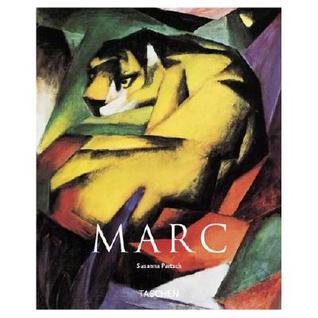
The Adaptable Educator’s Book Review – Franz Marc: 1880 – 1916 by Susanna Partsch
Susanna Partsch’s compact study of Franz Marc reads like a close, lucid argument wrapped in a beautifully produced object: part biography, part formalist reading, part cultural synthesis. Presented in Taschen’s Basic Art series, the volume is deliberately introductory — a short, image-forward guide to an artist whose restless palette and animal imaginaries have become shorthand … Continue reading The Adaptable Educator’s Book Review – Franz Marc: 1880 – 1916 by Susanna Partsch
Revisionist Pedagogy – Exploring Image Analysis and Interpretation: An Academic Perspective, v.2
In a world saturated with visual media, teaching image analysis and interpretation has to be more than occasional art-room talk — it must be a taught, assessed literacy. This essay argues that image analysis is a foundational visual-literacy competency that schools must teach intentionally, using Artificial Intelligence (AI) as an augmenting tool while centring cultural … Continue reading Revisionist Pedagogy – Exploring Image Analysis and Interpretation: An Academic Perspective, v.2
The Adaptable Educator’s Book Review – As a Man Thinketh by James Allen
James Allen’s As a Man Thinketh is a short, aphoristic meditation on moral agency and the formative power of thought. First published in 1903 as a slim, pamphlet-like tract, it has since persisted as a staple of self-help and New Thought traditions. Read today through a literary-critical lens, the text is at once a rhetorical … Continue reading The Adaptable Educator’s Book Review – As a Man Thinketh by James Allen
Revisionist Pedagogy – Generative Art and Visual Arts Education: an essay for curricular reform (Exploring the Intersection of Art and Algorithms: A Perspective Analysis of Generative Art, v.2)
Generative Art — where algorithmic rule-sets, chance operations, and computational models meet studio practice — offers a productive frontier for reforming visual arts education. This essay unpacks Generative Art’s historical roots, theoretical foundations, and contemporary significance with the explicit aim of showing how curricular integration can cultivate computational thinking, creative agency, and critical literacy about … Continue reading Revisionist Pedagogy – Generative Art and Visual Arts Education: an essay for curricular reform (Exploring the Intersection of Art and Algorithms: A Perspective Analysis of Generative Art, v.2)
Revisionist Pedagogy – Integrating Artificial Intelligence in Visual Arts Education: A Modern Pedagogical Call-to-action
The integration of Artificial Intelligence (AI) has become a topic of considerable debate and scholarly interest across academic disciplines, particularly in relation to education and teaching methodologies. Within visual arts education, this debate takes on added urgency, as artistic production itself has been profoundly reshaped by digital and computational technologies. In the context of adolescent … Continue reading Revisionist Pedagogy – Integrating Artificial Intelligence in Visual Arts Education: A Modern Pedagogical Call-to-action
 The New Renaissance Mindset